
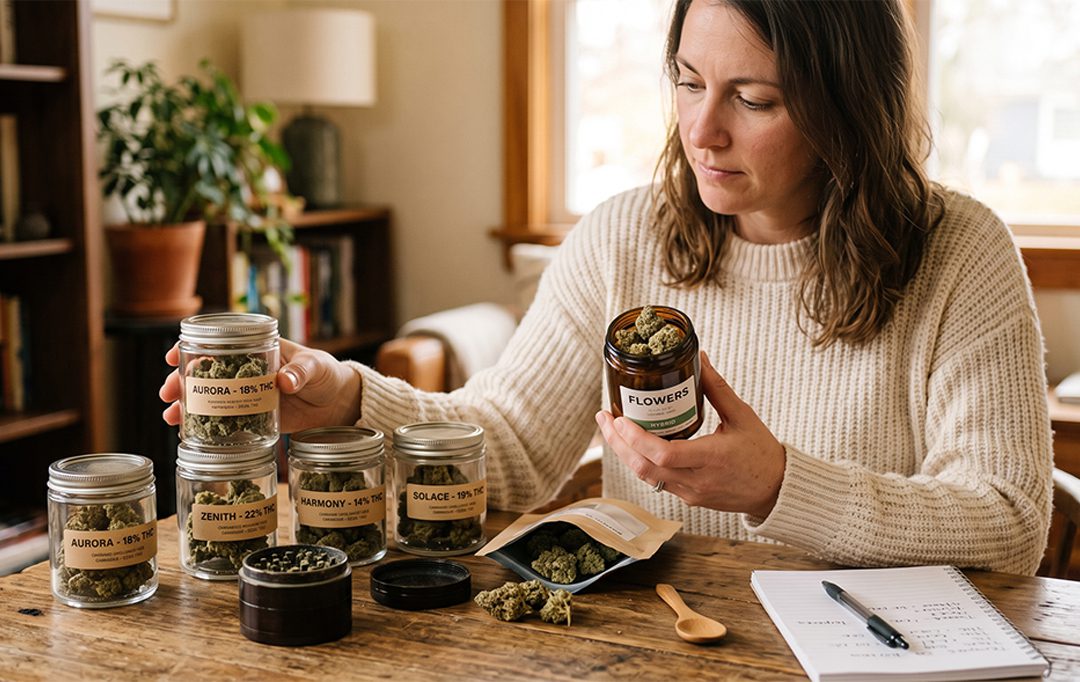
Cannabis potency is often one of the first things people check when comparing products. THC percentage can look like a simple way to decide which cannabis is “better.” However, the highest number on the label is not automatically the best choice.
Cannabis potency generally refers to the concentration or amount of THC and other cannabinoids in a product. Higher THC can produce stronger intoxicating effects, but that does not mean the product will be more suitable for every consumer. Product type, THC and CBD levels, serving size, consumption method, and personal tolerance all matter.
That is why understanding cannabis THC potency can help you make more informed choices. Rather than chasing the biggest number, it makes sense to look at the complete product profile.
What Does Cannabis Potency Mean?
Cannabis potency describes how much THC, CBD, or other cannabinoids are present in a product. THC is the main intoxicating cannabinoid in cannabis, while CBD is not intoxicating.
The way potency is shown depends on the type of product. Flower may show THC as a percentage or mg/g, while edibles usually show THC in milligrams. This means a direct comparison is not always as simple as looking at two numbers.
|
Product |
How Potency Is Commonly Displayed |
|
Flower |
THC percentage or mg/g |
|
Pre-rolls |
THC percentage or mg/g |
|
Edibles |
THC milligrams per serving and package |
|
Oils/extracts |
THC concentration |
|
Concentrates |
Often a very high THC percentage |
|
Topicals |
Total THC in the container |
Health Canada requires legal cannabis products to display THC and CBD information on their labels. Legal products are also tested for THC and CBD accuracy and certain contaminants.
Is Higher THC Always Better?
No. Higher THC does not automatically mean better cannabis.
A product with a high THC concentration may produce stronger intoxicating effects. For some consumers, that may be more than they are looking for. New or occasional consumers, in particular, may prefer to begin with lower-potency options.
Personal tolerance also matters. Someone with more experience may choose a different level of cannabis strength than someone who is trying cannabis for the first time.
Product format matters, too. A high-THC edible and high-THC flower do not deliver THC in the same way. The body processes each product differently.
So, instead of asking only, “What has the highest THC?” a better question is, “What product strength fits my experience and preferences?”
How THC Potency Can Affect the Cannabis Experience
Intensity of Effects
As THC concentration increases, the intoxicating effects can become stronger. This is one reason Health Canada recommends a “start low, go slow” approach, especially for new or occasional consumers.
Duration and Onset
The consumption method can change how quickly effects are noticed and how long they last. Edibles generally take longer to produce noticeable effects than inhaled cannabis. Health Canada notes that edible cannabis can take 30 minutes to 2 hours to be felt, with full effects taking longer.
That delay is important when considering cannabis product strength. Taking more before the first serving has taken effect can lead to overconsumption.
Tolerance and Individual Differences
Cannabis does not affect everyone in exactly the same way. Experience, tolerance, product type, THC level, and other factors can all make a difference.
Therefore, two people may choose different products even when they have similar preferences.
Potential for Overconsumption
Higher potency can make it easier to consume more THC than intended, especially when serving sizes are unclear or when an edible has not taken effect yet.
Reading the label and following the stated serving information can help consumers make more informed decisions.
THC Percentage vs Total THC: What’s the Difference?
This is an important distinction when comparing cannabis products.
THC percentage shows the concentration of THC in a product. It is commonly used for dried cannabis and some other products.
Total THC, on the other hand, tells you how much THC is contained in a particular product or package. Edibles commonly use milligrams to show their THC amount.
For example, a flower label may show THC as a percentage or mg/g. An edible may show a specific number of milligrams per piece and for the entire package.
Health Canada’s labelling guidance explains that THC and CBD can be displayed as amounts or concentrations depending on the product.
So, don’t rely on one number alone. Check the full label.
Why Cannabis Product Type Matters
Flower
Flower is commonly labelled with THC as a percentage or mg/g. The total amount you consume depends on how much flower is used.
Pre-Rolls
Pre-rolls generally provide THC information based on the cannabis inside. Check the package to understand the listed potency before purchasing.
Edibles
Edibles usually show THC in milligrams per unit and package. Because they take longer to produce noticeable effects, careful label reading is especially important.
Vapes
Vape products may list THC as a percentage or mg/g. Their format can make it easier to consume THC quickly, so potency deserves close attention.
Concentrates
Concentrates can contain substantially higher THC levels than traditional flower. Health Canada specifically advises new and occasional consumers to avoid high-THC extracts because higher amounts of THC can increase the risk of overconsumption.
Oils and Tinctures
Oils may list THC and CBD in mg/mL or as a total amount. Always check the label for the serving information provided with the product.
Topicals
Topical cannabis products are labelled with the amount of THC and CBD in the container. They are different from products intended to produce intoxicating effects.
THC Isn’t the Only Factor to Consider
THC is important, but it is only one part of a cannabis product.
When comparing options, look at:
- THC concentration
- CBD content
- Other cannabinoids
- Terpene profile
- Product type
- Serving size
- Consumption method
- Ingredients
- Testing information
- Personal experience and tolerance
The balance between THC and CBD can also differ from product to product. Health Canada notes that cannabis products may contain mostly THC, mostly CBD, or a combination of both, along with other cannabinoids and terpenes.
This broader view can help you understand cannabis potency explained in a more useful way. A product with slightly less THC may still be a better match for your preferences than the strongest option available.
How to Read a Cannabis Product Label
Before buying cannabis, take a few moments to check the package. Look for:
- THC amount or concentration
- CBD amount or concentration
- Serving size
- Total product amount
- Product type
- Ingredients
- Testing and quality information
- Batch or manufacturing details
- Required warning information
Health Canada states that legal cannabis products must meet federal rules for quality, packaging, and labelling. They are also tested for THC and CBD accuracy and harmful levels of contaminants.
Buying from an authorized retailer is another important part of making an informed purchase.
How to Choose a Cannabis Potency That Fits Your Needs
There is no single THC level that works for everyone. Instead, consider your experience and the product format.
New or occasional consumer: Lower-potency options can be easier to understand and manage.
Experienced consumer: Consider THC alongside tolerance, serving size, and product type instead of choosing based only on the highest percentage.
Edible consumer: Pay close attention to THC milligrams per serving and remember that edible products can take time to produce noticeable effects.
Concentrate consumer: Be aware that extracts can contain much higher THC concentrations than flower.
Health Canada recommends starting with a low amount of THC and going slowly rather than immediately choosing high-potency products.
Common Mistakes When Choosing Cannabis Potency
Choosing cannabis based only on the highest THC percentage is one of the most common mistakes. A few others are worth keeping in mind:
- Ignoring the serving size
- Confusing THC percentage with total milligrams
- Taking more before an edible has had time to work
- Ignoring CBD content
- Forgetting that product type affects the experience
- Skipping the product label
- Buying products without reliable testing information
- Purchasing cannabis from unlicensed sellers
Legal cannabis in Canada is subject to rules for testing, packaging, and labelling. Unlicensed products may not provide reliable THC or CBD information.
Make Potency One Part of Your Decision
Higher THC isn’t automatically better. The right product depends on several factors, including THC concentration, product type, cannabinoid profile, serving size, labelling, and individual tolerance.
A high-potency product may suit one experienced consumer but be a poor fit for someone new to cannabis. On the other hand, a lower-THC product may offer the level of cannabis strength someone is actually looking for.
The smart approach is to read the label, compare products, understand the serving size, and choose a legal product from an authorized retailer. Greenleaf offers a range of cannabis products, making it easier to compare options based on the information provided.
Explore Cannabis Products at Greenleaf
Browse Greenleaf’s cannabis selection and compare THC, CBD, product types, and available product details before placing your order. Choose based on what fits you, not simply the biggest THC number.
FAQs
What does cannabis potency mean?
Cannabis potency refers to the concentration or amount of cannabinoids, especially THC and CBD, found in a cannabis product.
Is higher THC better?
Not necessarily. Higher THC can produce stronger intoxicating effects, but a stronger product is not automatically a better or more suitable choice.
What THC percentage is considered high?
There is no single cutoff for every cannabis product. THC should be considered alongside the product type, serving size, and how the amount is measured.
Does CBD make cannabis less potent?
Not directly. THC and CBD are different cannabinoids, so CBD content should not be treated as a simple measure of whether cannabis is more or less potent.
Are concentrates more potent than flower?
Generally, yes. Cannabis concentrates can contain much higher THC concentrations than traditional flower.
Why can edibles feel stronger or last longer?
Edibles take longer to produce noticeable effects and can last longer than inhaled cannabis. This delay can make accidental overconsumption more likely.
How should beginners approach cannabis potency?
Health Canada recommends starting with a low amount of THC and going slowly rather than immediately choosing high-potency products.
How can I compare cannabis products?
Compare THC and CBD amounts, serving size, product type, ingredients, labelling, testing information, and whether the product comes from an authorized retailer.
Shop Greenleaf and Choose With Confidence
Ready to compare your options? Visit Greenleaf’s online selection, review the product labels, and choose a cannabis product that matches your experience and preferences.


Leave A Comment
You must be logged in to post a comment.